
In an airport restroom, a wash basin may be used continuously from morning until late at night.
That changes the way the product should be selected.
For high-traffic public facilities, the question is not simply whether a basin looks good in a showroom. The more important question is whether its design makes sense after thousands of daily interactions.
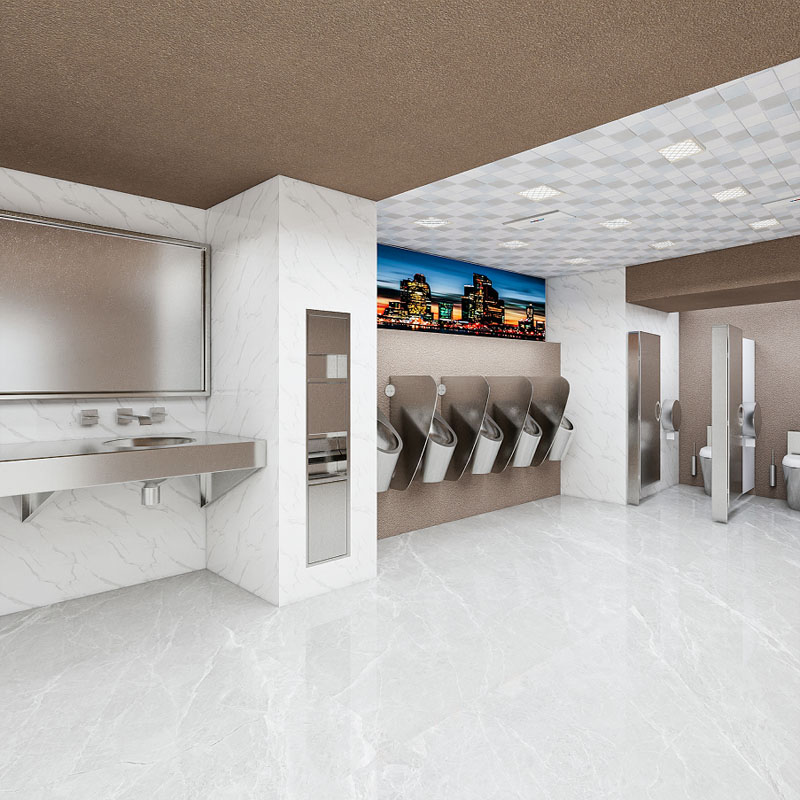
Start With Passenger Flow
Airport and transportation projects are heavily influenced by user flow.
A restroom may need to accommodate a large number of people within a limited space, so the basin layout becomes part of the overall circulation design.
Project teams may need to consider:
Number of users at peak times
Available wall length
Distance between washing stations
Accessibility requirements
Cleaning access
Plumbing locations
A multi-user stainless steel wash basin can sometimes make better use of the available space than several individual units.
One Size Does Not Fit Every Public Project
A basin designed for an airport may not be appropriate for a railway station, stadium, school, or shopping centre.
The surrounding architecture and expected traffic are different.
For example, a compact wall-mounted basin may work well where floor space is limited.
A longer multi-user unit may be more appropriate where several people need to wash their hands simultaneously.
For refurbishment projects, the existing plumbing layout can be equally important.
This is why project-specific dimensions should be confirmed before production.
Cleaning Access Should Be Considered During Design
Maintenance teams interact with commercial wash basins far more often than most end users realize.
The space around the basin needs to allow cleaners to work efficiently.
Design considerations can include:
Accessible surfaces
Simple basin geometry
Drainage arrangement
Underside clearance
Avoiding unnecessary hard-to-reach areas
A design that looks impressive but creates maintenance difficulties can become a problem once the building is operational.
Standard Product or Custom Unit?
For smaller commercial projects, standard stainless steel basins can often meet the requirements.
For airports and major infrastructure projects, however, customization may be necessary.
Manufacturers may need to adjust:
Overall length
Number of washing stations
Bowl spacing
Tap configuration
Splashback dimensions
Drainage position
Mounting structure
The advantage is not customization for its own sake.
It is the ability to make the sanitary fixture work with the actual building.
What Procurement Teams Should Ask Suppliers
Before approving a stainless steel wash basin supplier, request:
Product drawings
Material specifications
Installation details
Available configurations
Production lead time
Packaging method
Previous project experience
For large orders, it is also worth confirming whether the supplier can maintain consistent dimensions and finishes across different production batches.
Think About the Entire Installation
A wash basin does not exist independently.
It connects to:
Water supply
Drainage
Wall structure
Faucets
Accessories
Restroom partitions
Countertops or surrounding finishes
A good supplier should therefore be able to discuss the product in relation to the installation rather than only provide a catalogue image.
Final Takeaway
For airports and other high-traffic facilities, successful sanitary design comes from getting the small details right.
The best stainless steel wash basin is the one that fits the space, supports user flow, works with the building services, and remains practical for the maintenance team.
That is why project requirements should be discussed with the manufacturer before production—not after the products arrive on site.
Planning a commercial or public restroom project? Share your drawings or required dimensions with KUGE to discuss a suitable stainless steel wash basin configuration.
