
Introduction
Public restroom design has changed significantly over the past decades. Today, architects and facility managers are no longer focusing only on basic functionality. Modern restroom projects must balance hygiene, durability, user experience, maintenance efficiency, and sustainability.
As public facilities become busier and operational requirements become stricter, traditional sanitary materials are facing new challenges.
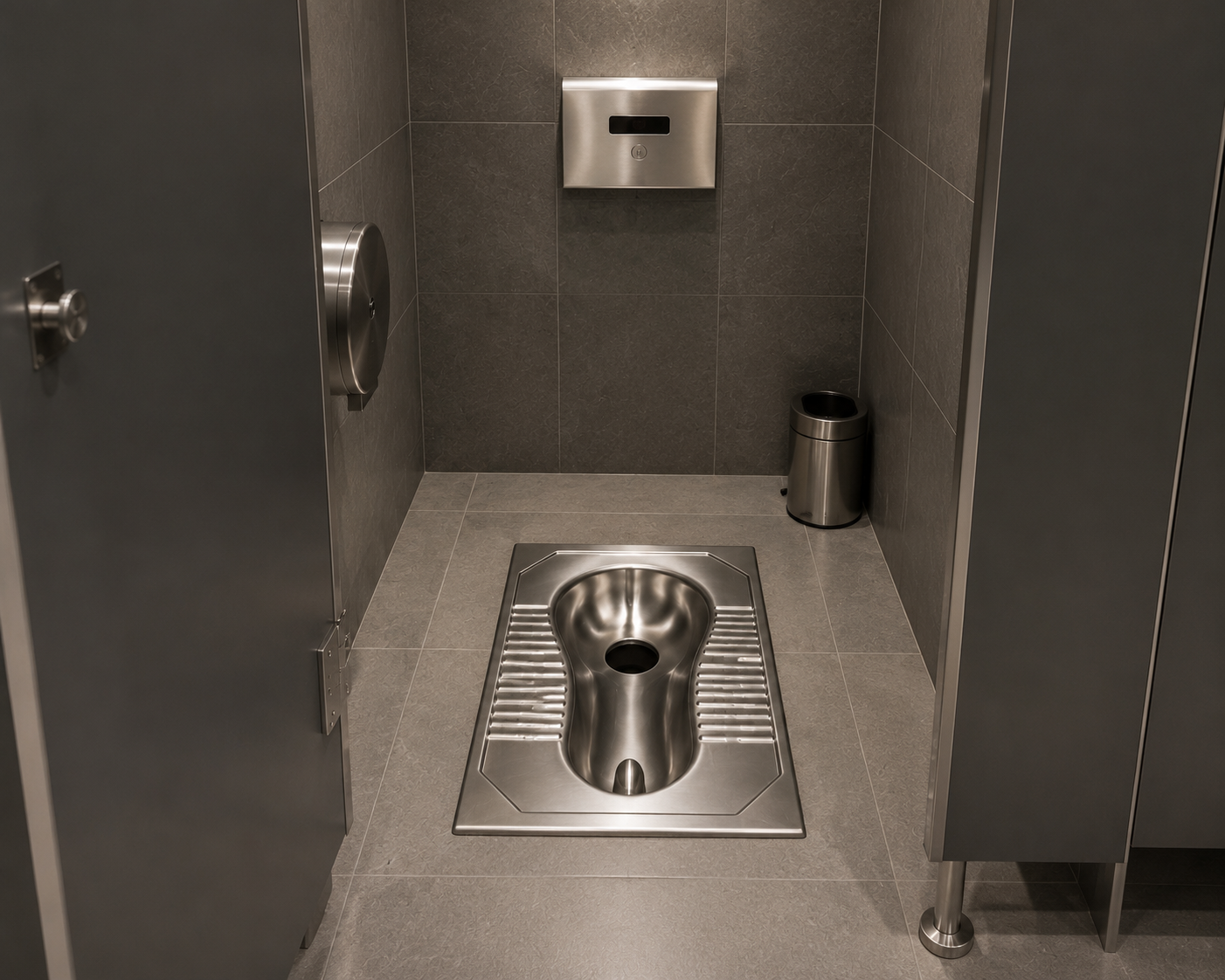
This is why the stainless steel squat toilet is gaining increasing attention in commercial and public infrastructure projects.
With advantages including excellent durability, easy maintenance, corrosion resistance, and long service life, stainless steel squat toilets are becoming a preferred solution for high-demand environments such as transportation hubs, schools, factories, hospitals, and government facilities.
This article explores the role of stainless steel squat toilets in future restroom design and explains why more projects are choosing stainless steel sanitary solutions.
1. The Changing Requirements of Modern Public Restrooms
Public restrooms are among the most frequently used spaces in commercial buildings.
Unlike residential bathrooms, public facilities must handle:
Hundreds or thousands of daily users
Continuous cleaning cycles
Different user behaviors
Long operating hours
Strict hygiene requirements
Because of these challenges, architects are increasingly selecting materials that can provide reliable performance over many years.
A commercial stainless steel squat toilet meets these requirements by combining industrial strength with practical sanitary design.
2. Why Traditional Sanitary Fixtures Face New Challenges
Traditional ceramic squat toilets have been widely used for many years. However, modern public facilities require higher performance standards.
Common challenges include:
Impact Damage
Ceramic materials can crack when exposed to strong impact.
In high-traffic environments, damaged fixtures may require complete replacement, causing:
Higher maintenance costs
Longer repair time
Temporary restroom closure
Frequent Cleaning Requirements
Public facilities require daily cleaning and disinfection.
Repeated exposure to cleaning chemicals may affect certain materials over time.
Long-Term Operational Costs
For large buildings, the purchase price is only one part of the total investment.
Facility managers must also consider:
Maintenance frequency
Replacement cycles
Labour costs
Product lifespan
These factors have increased demand for more durable alternatives.
3. Stainless Steel Squat Toilet as a Long-Term Solution
A stainless steel squat toilet is designed specifically for demanding environments.
Its advantages come from both material properties and manufacturing technology.
Key features include:
Strong Structural Performance
Stainless steel provides excellent mechanical strength and resistance against impact.
This makes it suitable for:
Airports
Railway stations
Schools
Factories
Public buildings
Long Service Life
Compared with many traditional sanitary materials, stainless steel products can maintain reliable performance for decades when properly manufactured and maintained.
Design Flexibility
Because stainless steel is fabricated rather than molded, manufacturers can provide:
Custom dimensions
Special drainage positions
Different installation methods
OEM solutions
This flexibility helps architects meet specific project requirements.
4. Hygiene Becomes a Priority in Restroom Design
After global public health concerns, hygiene has become one of the most important considerations in facility design.
Modern public restrooms require materials that support:
Easy cleaning
Fast sanitation
Reduced contamination risk
Stainless steel offers several hygiene advantages:
Non-porous surface
Smooth finish
Resistance to stains
Compatibility with disinfectants
For hospitals, schools, and transportation facilities, these characteristics make stainless steel sanitary products an attractive choice.
5. Sustainable Building Trends and Stainless Steel
Sustainability is becoming a major factor in modern construction projects.
Building owners are increasingly considering:
Product lifespan
Material recyclability
Maintenance requirements
Environmental impact
Stainless steel supports sustainable development because:
Long Lifespan
Products that last longer reduce replacement waste.
Recyclable Material
Stainless steel can be recycled repeatedly without losing its essential properties.
Lower Maintenance Demand
Reduced repair requirements help lower resource consumption during operation.
For green building projects, stainless steel sanitary products align well with long-term sustainability goals.
6. Smart Public Restroom Integration
Future public restrooms are becoming more intelligent.
New restroom systems increasingly include:
Sensor flushing
Automatic cleaning systems
Water-saving technologies
Smart monitoring
A stainless steel squat toilet can be integrated with modern flushing and management systems, providing a durable foundation for smart restroom development.
7. Application Trends Around the World
Transportation Infrastructure
Airports and railway stations require sanitary equipment that can operate continuously.
Stainless steel squat toilets provide:
High durability
Easy maintenance
Reliable performance
Industrial Facilities
Factories often require restroom products that can withstand intensive usage.
Stainless steel provides:
Strong structure
Corrosion resistance
Long service life
Educational Facilities
Schools need products that balance durability and maintenance efficiency.
Government Projects
Public infrastructure projects often prioritize:
Reliability
Low maintenance
Long lifecycle value
8. How Manufacturers Support Future Projects
Professional stainless steel sanitary manufacturers are no longer only producing standard products.
They increasingly provide complete project solutions, including:
Engineering consultation
Custom product development
OEM manufacturing
Technical drawings
Installation guidance
For international construction projects, choosing an experienced manufacturer can significantly reduce project risks.
Conclusion
The future of public restroom design requires products that are not only functional but also durable, hygienic, and sustainable.
A stainless steel squat toilet represents a modern sanitary solution designed for the challenges of high-traffic environments.
As architects and facility managers continue to prioritize lifecycle value and operational efficiency, stainless steel sanitary products will play an increasingly important role in the development of future public facilities.
