
Introduction
Choosing sanitary fixtures for commercial buildings requires more than simply selecting a product that fits the restroom layout. For large-scale projects, every component must meet specific requirements related to durability, hygiene, maintenance, and long-term operating performance.
A stainless steel squat toilet is widely used in public and commercial facilities because it provides excellent structural strength, corrosion resistance, and easy maintenance compared with traditional sanitary materials.
However, not all stainless steel squat toilets are designed the same way. Material grade, thickness, manufacturing quality, drainage structure, and installation method can significantly affect product performance.
For architects, contractors, and project buyers, understanding these factors helps ensure the selected product can meet the actual requirements of the building.
This guide explains the key considerations when purchasing a stainless steel squat toilet for commercial applications.
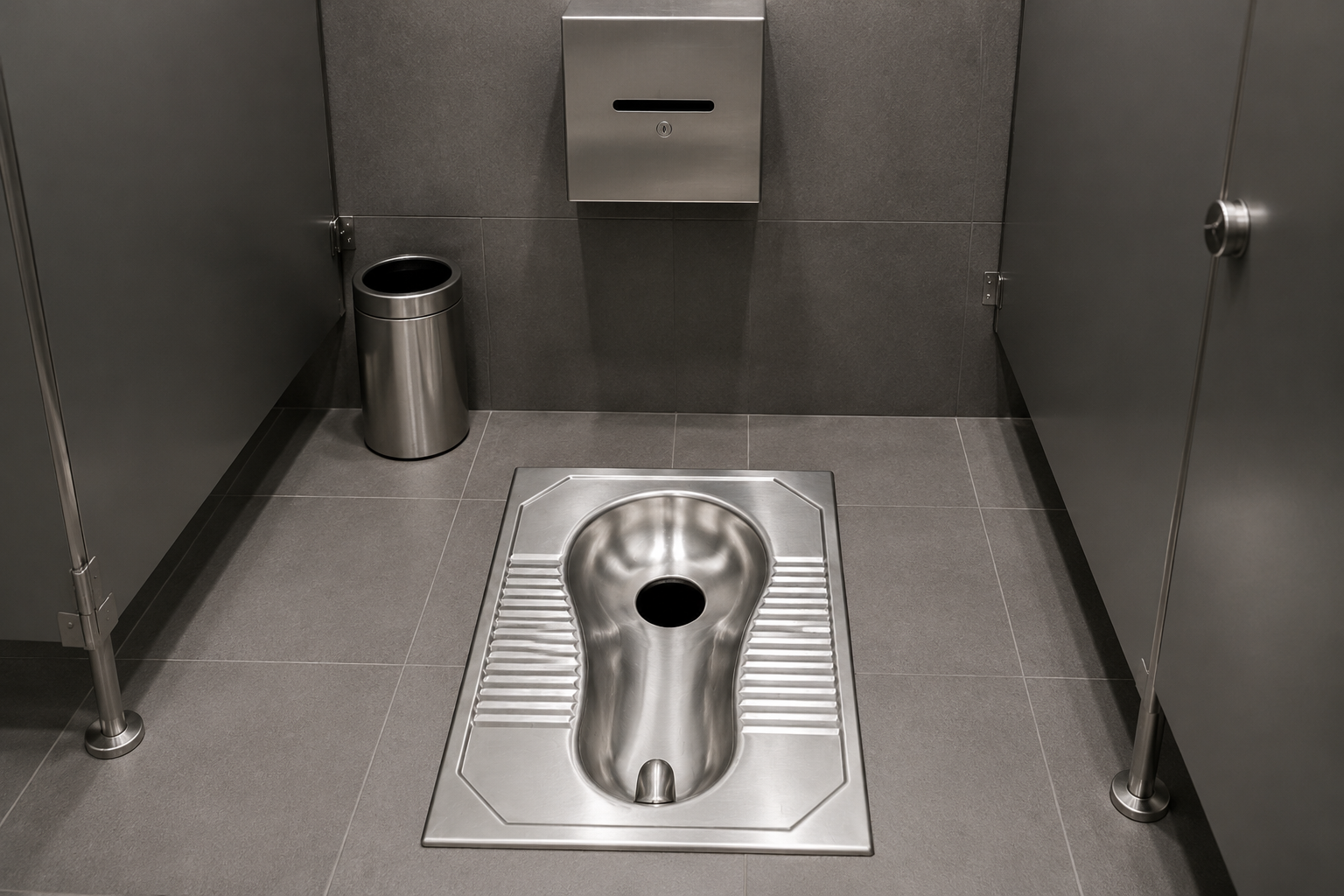
1. Understanding Stainless Steel Squat Toilet Construction
A high-quality stainless steel squat toilet is not simply a metal replacement for a ceramic squat pan. It is an engineered sanitary solution designed for environments where reliability and durability are essential.
The manufacturing process usually includes:
Stainless steel sheet cutting
Precision forming
TIG welding
Surface finishing
Quality inspection
Water leakage testing
Unlike ceramic products that rely mainly on molded structures, stainless steel squat toilets are fabricated as integrated metal systems, allowing manufacturers to optimize strength, dimensions, and installation requirements.
A professional stainless steel squat pan should provide:
Stable structure
Smooth drainage
Strong corrosion resistance
Easy cleaning surface
Long-term durability
2. Choosing the Right Stainless Steel Material Grade
Material selection is one of the most important decisions when purchasing a stainless steel squat toilet.
The two most commonly used grades are:
304 Stainless Steel
304 stainless steel is the standard choice for most indoor commercial applications.
Advantages:
Good corrosion resistance
High strength
Easy maintenance
Cost-effective
Recommended applications:
Schools
Shopping malls
Office buildings
Public restrooms
316 Stainless Steel
316 stainless steel provides enhanced corrosion resistance due to its molybdenum content.
It is recommended for:
Coastal areas
Marine environments
Chemical facilities
High humidity locations
Although the initial cost is higher, 316 stainless steel can provide better performance in aggressive environments.
3. Importance of Product Thickness and Welding Quality
When selecting a commercial stainless steel squat toilet, buyers should pay attention to more than appearance.
Important quality factors include:
Material Thickness
Appropriate thickness improves:
Structural stability
Impact resistance
Service lifespan
Thin materials may reduce initial costs but can affect long-term performance.
Welding Quality
The welding process directly affects product reliability.
High-quality manufacturing should ensure:
Smooth weld seams
No leakage points
Strong joint structure
Easy cleaning surface
For public facilities operating every day, welding quality is a critical factor.
4. Drainage Design and Installation Requirements
A well-designed drainage system is essential for any squat toilet installation.
Before purchasing, project teams should consider:
Drainage Outlet Position
The outlet location should match the building plumbing system.
Incorrect positioning may increase installation difficulty and modification costs.
Water Flow Efficiency
A good flushing structure should provide:
Effective waste removal
Reduced water consumption
Prevention of odor
Floor Integration
The installation should ensure:
Proper waterproofing
Stable positioning
Easy maintenance access
Professional manufacturers can provide technical drawings to support project installation.
5. Selecting the Right Surface Finish
Surface treatment affects both appearance and maintenance.
Common finishes include:
Satin Finish
The most popular option for commercial applications.
Benefits:
Professional appearance
Reduced fingerprints
Easy cleaning
Brushed Finish
Provides a modern architectural appearance and is often used in premium projects.
Polished Finish
Creates a highly reflective surface but requires more frequent maintenance to maintain appearance.
For most public restroom projects, satin finish provides the best balance between aesthetics and practicality.
6. Customization Options for Large Projects
Large commercial projects often require customized sanitary solutions.
A professional stainless steel squat toilet manufacturer can provide:
Custom Dimensions
Suitable for:
Special restroom layouts
Renovation projects
Large infrastructure facilities
Special Configurations
Options may include:
Different drainage positions
Integrated flushing systems
Anti-vandal structures
Special mounting designs
OEM Production
OEM services allow buyers to customize:
Product size
Material thickness
Surface finish
Packaging
Branding requirements
This is especially important for contractors handling international projects.
7. Application Recommendations
Educational Facilities
Require durable products capable of handling frequent daily use.
Industrial Buildings
Need strong structures and easy maintenance.
Transportation Facilities
Require reliable performance under extremely high traffic.
Public Infrastructure
Benefit from long lifespan and reduced maintenance requirements.
Military and Correctional Facilities
Often require reinforced and anti-vandal designs.
Conclusion
Selecting the right stainless steel squat toilet requires careful consideration of material quality, manufacturing process, drainage design, and project requirements.
For commercial and public facilities, the right product choice can significantly improve restroom reliability while reducing long-term maintenance costs.
By working with an experienced stainless steel sanitary manufacturer, project owners can obtain customized solutions that meet both functional and architectural requirements.
