
Introduction
In many regions globally, squat toilets remain a staple of public restroom design thanks to their practicality, space efficiency, and cultural alignment. However, high-traffic environments often expose the limits of traditional ceramic fixtures. Frequent cracking, intensive maintenance, and high replacement costs present constant challenges for facility managers.
To address these pain points, many architects, contractors, and facility operators are turning to stainless steel squat toilets as a highly durable alternative. Engineered specifically for demanding commercial spaces, these fixtures combine rugged structural integrity with corrosion resistance, simple sanitization, and an exceptionally long lifespan. Today, they are the preferred choice for schools, factories, transit hubs, hospitals, military bases, and various public infrastructure projects worldwide.
In this comprehensive guide, we will explore the core advantages of stainless steel squat toilets, their key commercial applications, and what to look for when choosing the perfect model for your next project.
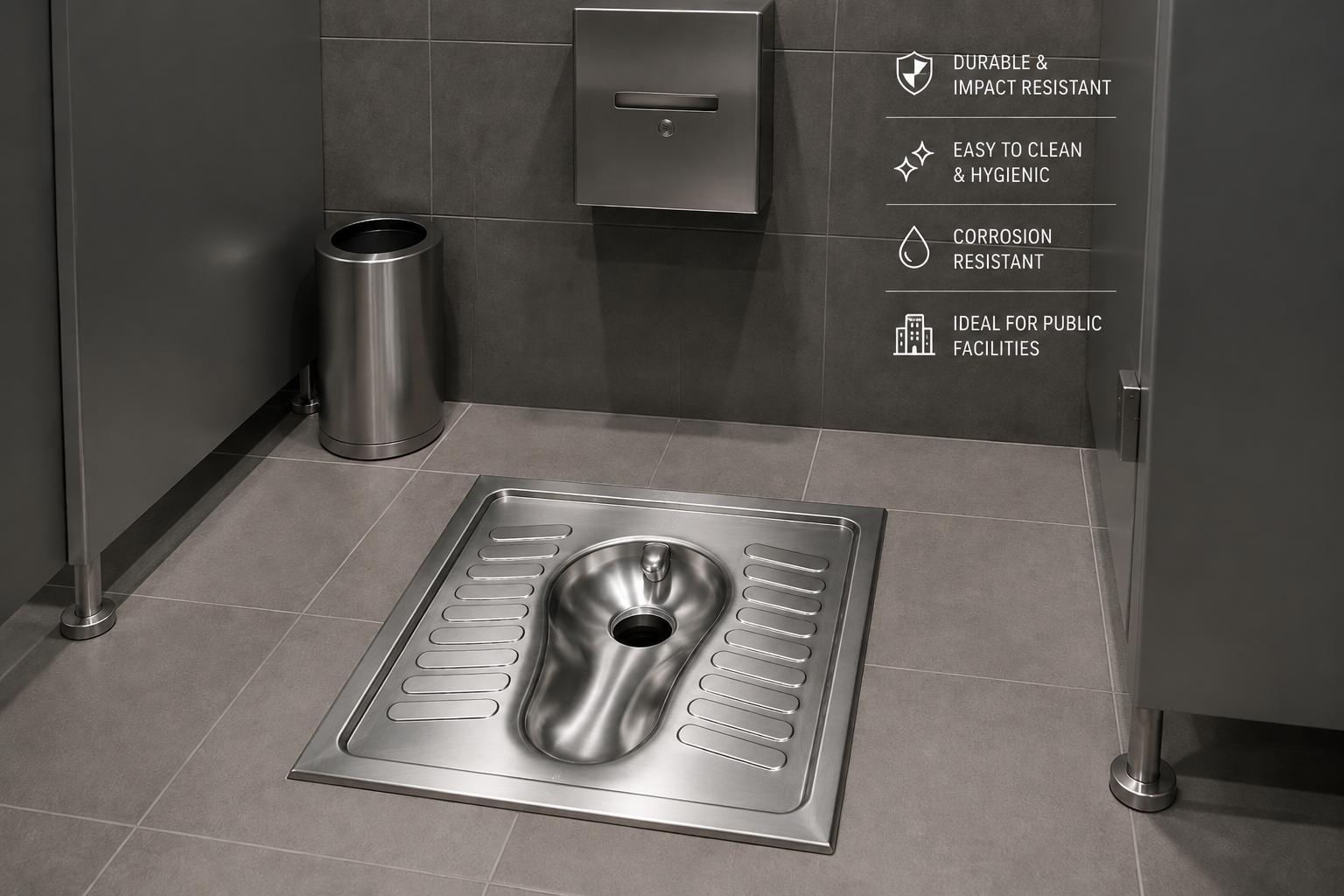
1. What Is a Stainless Steel Squat Toilet?
A stainless steel squat toilet is a floor-installed sanitary fixture manufactured from stainless steel, designed for squatting-style restroom applications.
Unlike conventional ceramic squat pans, stainless steel models are fabricated using industrial-grade stainless steel sheets and advanced manufacturing processes, including:
Precision cutting
Metal forming
TIG welding
Surface polishing
Leak testing
Common materials include:
304 Stainless Steel
Suitable for most indoor commercial applications.
Advantages:
Excellent corrosion resistance
Good mechanical strength
Cost-effective solution
316 Stainless Steel
Recommended for more demanding environments.
Applications:
Coastal areas
Industrial facilities
Chemical environments
High humidity locations
2. Why Choose Stainless Steel for Squat Toilets?
3. Key Advantages of Stainless Steel Squat Toilets
1. Unmatched Durability under Heavy Abuse
The primary benefit of stainless steel is its sheer structural strength. Unlike brittle ceramic, stainless steel does not crack, chip, or shatter under heavy impact. This makes it the ultimate choice for high-pressure environments like **transit stations, schools, manufacturing plants, and military barracks**, where equipment must perform flawlessly under continuous load.
2. Effortless Cleaning and Superior Hygiene
Hygiene is paramount in public restroom design. Stainless steel provides a non-porous, ultra-smooth surface that resists bacteria buildup, stubborn stains, and unpleasant odors. Because it tolerates strong disinfectants and rapid wipe-downs, cleaning crews can sanitize facilities in a fraction of the time required for traditional materials.
3. Excellent Corrosion and Chemical Resistance
Restrooms are naturally harsh environments. Cheaper materials quickly suffer from surface deterioration, rusting, and unsightly staining due to moisture and cleaning agents. High-grade stainless steel (such as **Grade 304 or Grade 316**) naturally resists corrosion, ensuring your facilities look pristine and professional for decades.
4. Common Applications of Stainless Steel Squat Toilets
Schools and Universities
Educational facilities require sanitary products that can withstand frequent student usage while keeping maintenance costs under control.
Stainless steel squat toilets provide:
Long service life
Easy maintenance
Resistance to damage
Factories and Industrial Facilities
Factories often have large numbers of workers using restroom facilities during shift changes.
A stainless steel squat toilet offers:
Heavy-duty performance
Fast cleaning
Reduced replacement requirements
Public Transportation Facilities
Airports, railway stations, and bus terminals require reliable restroom equipment.
Stainless steel squat toilets help maintain restroom availability despite high visitor numbers.
Military and Remote Facilities
Remote locations often require sanitary systems that can operate reliably with limited maintenance support.
The durability of stainless steel makes it suitable for these challenging environments.
5. How to Choose the Right Stainless Steel Squat Toilet
When selecting a supplier or product, consider:
1. Material Grade
Choose between:
304 stainless steel
316 stainless steel
based on the environment.
2. Manufacturing Quality
Check:
Welding quality
Material thickness
Surface treatment
Leak testing process
3. Project Requirements
Different projects may require:
OEM customization
Specific dimensions
Special drainage solutions
Large quantity production
Working with an experienced manufacturer ensures better project compatibility.
6. Frequently Asked Questions
Are stainless steel squat toilets suitable for public restrooms?
Yes. They are specifically designed for high-traffic commercial and public applications.
What stainless steel grade is recommended?
304 stainless steel is suitable for most projects, while 316 stainless steel is recommended for harsh environments.
Are stainless steel squat toilets easy to maintain?
Yes. Their smooth surface allows quick cleaning and reduces maintenance requirements.
Can stainless steel squat toilets be customized?
Yes. Manufacturers can customize size, thickness, design, and installation requirements according to project needs.
How long can a stainless steel squat toilet last?
With proper manufacturing and maintenance, stainless steel squat toilets can provide reliable service for decades.
