
Introduction
Mirrors used in correctional facilities require completely different performance standards compared with conventional bathroom mirrors.
In residential and commercial environments, appearance and reflection quality are usually the main considerations. However, institutional facilities such as correctional centers, detention facilities, psychiatric care units, and other high-security buildings require products designed with safety, durability, and long-term reliability in mind.
A stainless steel prison mirror is specifically developed for these demanding environments. Manufactured from high-quality stainless steel, it provides excellent impact resistance, corrosion protection, and a secure alternative to traditional glass mirrors.
With a strong metal structure and easy-maintenance surface, stainless steel security mirrors help facility managers create safer and more durable restroom and living area environments.
This article explains the key advantages, applications, and purchasing considerations of stainless steel prison mirrors.
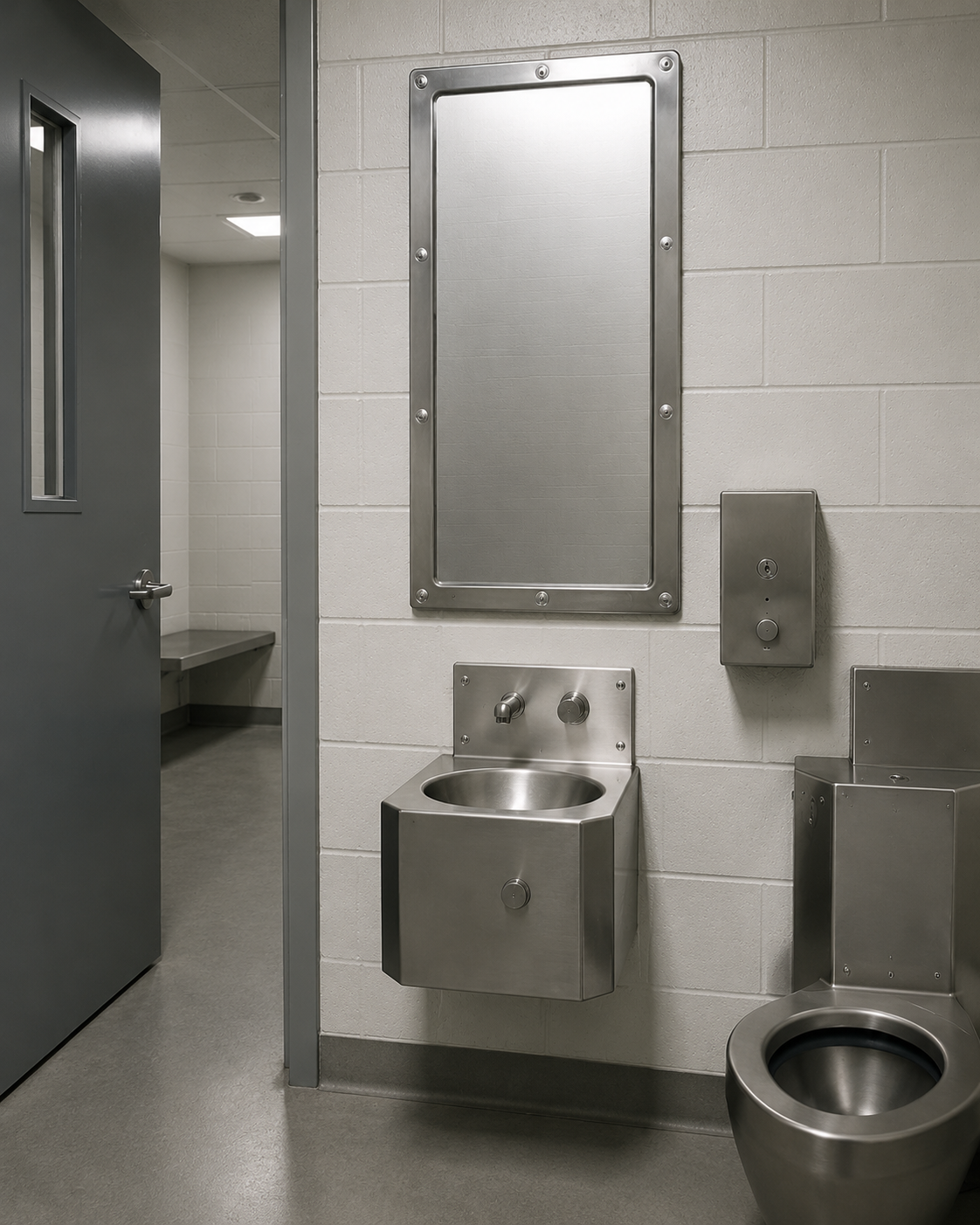
1. What Is a Stainless Steel Prison Mirror?
A stainless steel prison mirror is a safety-oriented mirror manufactured from stainless steel instead of conventional glass.
Unlike standard mirrors, which use a fragile glass surface, stainless steel mirrors are designed to provide:
High impact resistance
Reduced breakage risk
Long service life
Easy cleaning
Corrosion resistance
These characteristics make them suitable for environments where durability and safety are more important than decorative appearance.
Common installation locations include:
Correctional facilities
Detention centers
Psychiatric healthcare facilities
Military facilities
Public institutional buildings
2. Why Traditional Glass Mirrors Are Not Suitable for Secure Facilities
Traditional glass mirrors are widely used in homes, hotels, and offices because they provide excellent optical clarity and aesthetic appearance.
However, secure facilities require additional considerations.
Potential challenges of glass mirrors include:
Fragility
Glass can break under strong impact, creating maintenance and safety concerns.
Replacement Requirements
Damaged glass mirrors require replacement, increasing maintenance workload and operational costs.
Limited Durability
High-frequency use and demanding environments require materials with stronger resistance.
For these reasons, many institutional projects specify stainless steel alternatives.
3. Key Advantages of Stainless Steel Prison Mirrors
3.1 High Impact Resistance
The biggest advantage of stainless steel mirrors is their structural strength.
A stainless steel mirror uses a metal reflective surface that is much more resistant to impact compared with conventional glass products.
This makes it suitable for:
High-use facilities
Institutional buildings
Public security environments
3.2 Vandal Resistant Design
A vandal resistant mirror is designed to maintain performance in environments where products may experience intentional or accidental damage.
Benefits include:
Strong metal construction
Reduced breakage risk
Longer replacement cycles
This helps facility operators reduce maintenance requirements.
3.3 Corrosion Resistance
Institutional bathrooms often experience:
High humidity
Frequent cleaning
Chemical exposure
Stainless steel provides excellent corrosion resistance, especially when manufactured with appropriate grades such as 304 stainless steel.
For more demanding environments, 316 stainless steel can provide enhanced corrosion protection.
3.4 Easy Maintenance
A stainless steel security mirror provides:
Smooth surface
Simple cleaning process
Long-lasting appearance
Compared with fragile glass products, stainless steel mirrors are easier to maintain in high-use environments.
4. Anti-Ligature and Safety Considerations
In certain secure healthcare and institutional environments, product design must consider safety requirements.
An anti-ligature mirror is designed to reduce potential attachment points and improve overall safety performance.
Important design factors may include:
Rounded edges
Secure mounting structure
Tamper-resistant installation
Smooth surface design
Different facilities may have different safety specifications, so product selection should always follow project requirements and local regulations.
5. Applications Beyond Correctional Facilities
Although commonly known as a prison mirror, stainless steel security mirrors are also used in many other institutional applications.
Psychiatric Healthcare Facilities
Mental healthcare environments often require durable and safety-focused products.
Stainless steel mirrors provide:
Strong construction
Reduced breakage risk
Easy maintenance
Military Facilities
Military buildings require reliable products capable of handling demanding conditions.
Schools and Public Institutions
Some high-traffic facilities choose stainless steel mirrors because of their durability and vandal-resistant properties.
Industrial Facilities
Factories and worker accommodation buildings may use stainless steel mirrors because they provide long-term reliability.
6. Material and Manufacturing Quality
The performance of a stainless steel prison mirror depends greatly on manufacturing quality.
Important factors include:
Stainless Steel Grade
Common options:
304 Stainless Steel
Suitable for most indoor institutional applications.
Advantages:
Good corrosion resistance
Strong durability
Cost efficiency
316 Stainless Steel
Recommended for:
Coastal environments
High humidity areas
More aggressive conditions
Surface Finish
Common finishes include
Polished stainless steel
Satin stainless steel
Brushed stainless steel
Satin finish is often preferred because it reduces fingerprints and provides a professional appearance.
7. How to Choose the Right Stainless Steel Security Mirror
When selecting a supplier, consider:
1. Product Structure
Check:
Material thickness
Edge treatment
Mounting method
2. Manufacturing Capability
A professional manufacturer should provide:
Custom dimensions
OEM production
Quality inspection
Export experience
3. Project Requirements
Different applications may require:
Standard security mirrors
Custom shapes
Special mounting systems
Specific stainless steel grades
8. Frequently Asked Questions
What is a stainless steel prison mirror?
A stainless steel prison mirror is a safety mirror manufactured from stainless steel instead of glass, designed for secure and high-use facilities.
Are stainless steel mirrors unbreakable?
They are highly impact resistant compared with glass mirrors, but performance depends on product design, thickness, and installation method.
Where are stainless steel security mirrors used?
They are commonly used in correctional facilities, detention centers, psychiatric facilities, military buildings, and institutional projects.
Can stainless steel prison mirrors be customized?
Yes. Manufacturers can customize dimensions, shapes, thickness, finishes, and mounting methods according to project requirements.
Which stainless steel grade is recommended?
304 stainless steel is suitable for most indoor applications, while 316 stainless steel is recommended for more corrosive environments.
Conclusion
A stainless steel prison mirror is designed for environments where safety, durability, and reliability are critical.
Compared with traditional glass mirrors, stainless steel security mirrors provide stronger impact resistance, easier maintenance, and longer service life, making them an ideal solution for correctional facilities, institutional buildings, and other demanding applications.
For architects, contractors, and facility managers, selecting the right stainless steel mirror manufacturer ensures the product meets both functional requirements and long-term operational needs.
