
Introduction
Public restrooms are expected to operate efficiently every day, regardless of the number of visitors they receive. In airports, shopping malls, schools, hospitals, sports venues, and transportation hubs, restroom fixtures must withstand constant use while remaining clean, reliable, and easy to maintain.
For facility managers, restroom performance is measured by more than appearance. Downtime caused by broken fixtures, high cleaning costs, and frequent maintenance can significantly increase operating expenses over the lifetime of a building.
To address these challenges, many architects and contractors are specifying stainless steel urinals instead of conventional ceramic models. Designed for heavy-duty environments, stainless steel urinals provide exceptional durability, simplified cleaning, and a longer service life, making them an ideal solution for commercial and public restroom projects.
This article explores how stainless steel urinals contribute to operational efficiency, reduce maintenance costs, and support sustainable facility management.
1. Why Restroom Efficiency Matters
In commercial buildings, restroom efficiency has a direct impact on user satisfaction and operational costs. A restroom that requires frequent repairs or prolonged cleaning disrupts daily operations and increases labour expenses.
A stainless steel urinal is designed to minimize these interruptions. Its robust construction and corrosion-resistant material allow it to maintain reliable performance even under continuous daily use.
For facility managers overseeing large public buildings, investing in durable restroom fixtures is an effective way to improve long-term operational efficiency.
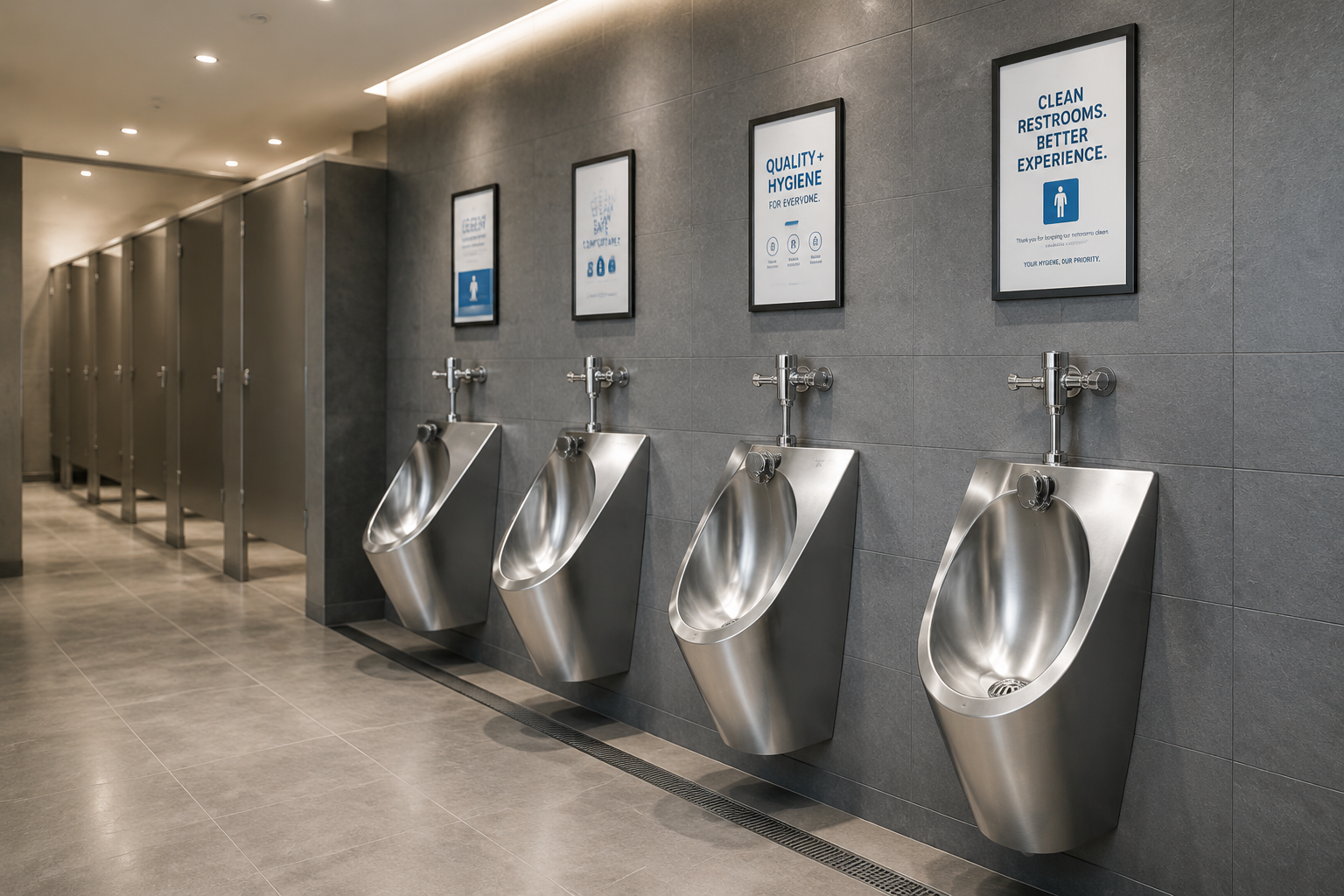
2. Common Challenges in High-Traffic Restrooms
Public restrooms often experience problems that are uncommon in residential environments.
Typical issues include:
Heavy daily usage
Frequent cleaning with strong chemicals
Accidental impacts from equipment
Intentional vandalism
High maintenance demands
Water consumption concerns
These factors place considerable stress on restroom fixtures and can shorten the lifespan of conventional ceramic products.
A commercial stainless steel urinal is specifically engineered to withstand these conditions while maintaining structural integrity.
3. How Stainless Steel Urinals Improve Operational Performance
Designed for Continuous Use
Unlike residential fixtures, commercial stainless steel urinals are built for environments where hundreds or even thousands of users access the restroom every day.
Their reinforced structure helps prevent damage caused by repeated use.
Faster Cleaning
The smooth stainless steel surface allows cleaning staff to remove stains and residue more quickly, helping reduce labour time during daily maintenance.
Improved Reliability
Because stainless steel resists impact and corrosion, facilities experience fewer unexpected repairs and longer service intervals.
4. Reducing Maintenance Costs Over Time
The initial purchase price of a restroom fixture represents only part of the overall investment.
Facility owners should also consider:
Cleaning frequency
Repair costs
Replacement cycles
Labour expenses
Downtime caused by maintenance
Although stainless steel urinals typically cost more upfront than ceramic alternatives, their lower maintenance requirements often result in reduced total ownership costs over many years of operation.
For public facilities with heavy daily traffic, this long-term value is a significant advantage.
5. Supporting Hygiene and User Satisfaction
Clean, well-maintained restrooms create a positive impression for visitors.
A stainless steel urinal contributes to better hygiene by providing:
A non-porous surface that is easy to disinfect
Resistance to staining
Compatibility with commercial cleaning agents
Reduced odor retention
Consistent appearance over time
These features help facility managers maintain higher cleanliness standards while improving the overall restroom experience.
6. Sustainability and Environmental Benefits
Modern building projects increasingly emphasize sustainable design.
Stainless steel supports these goals because it is:
Highly recyclable
Durable enough to reduce replacement frequency
Compatible with water-saving flush systems
Resistant to corrosion, extending product lifespan
By reducing waste and minimizing maintenance, stainless steel urinals contribute to environmentally responsible building management.
7. Real-World Applications
Airports
Support continuous passenger traffic while reducing maintenance interruptions.
Schools and Universities
Provide durable restroom solutions capable of withstanding daily student use.
Hospitals
Meet high hygiene requirements and simplify cleaning procedures.
Stadiums
Accommodate large crowds during peak events with reliable performance.
Industrial Facilities
Resist corrosion and perform well in demanding environments.
